The Iraqi Association for Information and Communications Technology organizes an electronic symposium on applications of artificial intelligence in the medical field.

As part of its ongoing efforts to enhance knowledge and keep pace with the latest developments in the field of information technology, the Iraqi Association for Information and Communications Technology (IAICT), in collaboration with the Iraqi Information Technology Group (ITIG), organized a distinguished electronic seminar via the Zoom platform titled: "Artificial Intelligence in the Medical Field", presented by Dr. Sarmad Mueen.
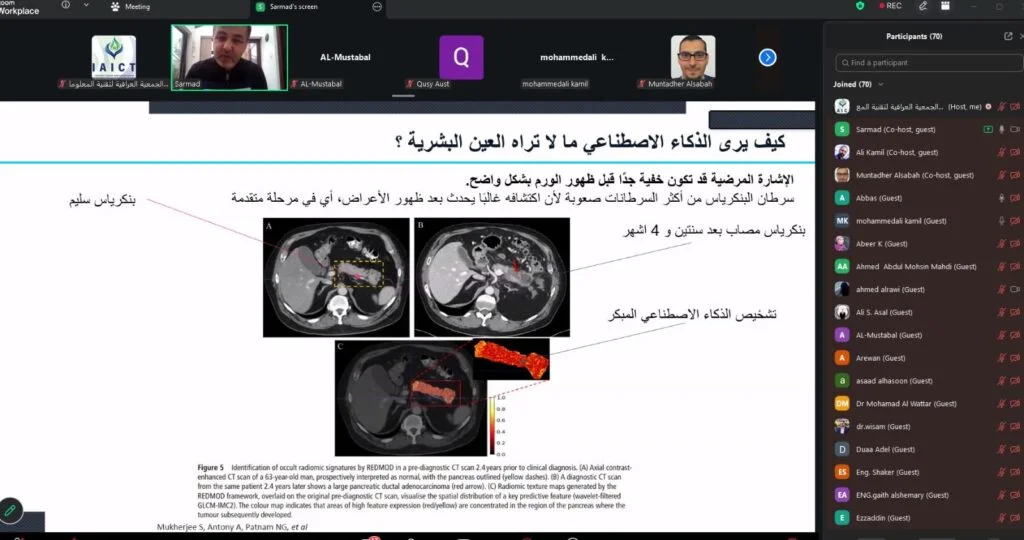
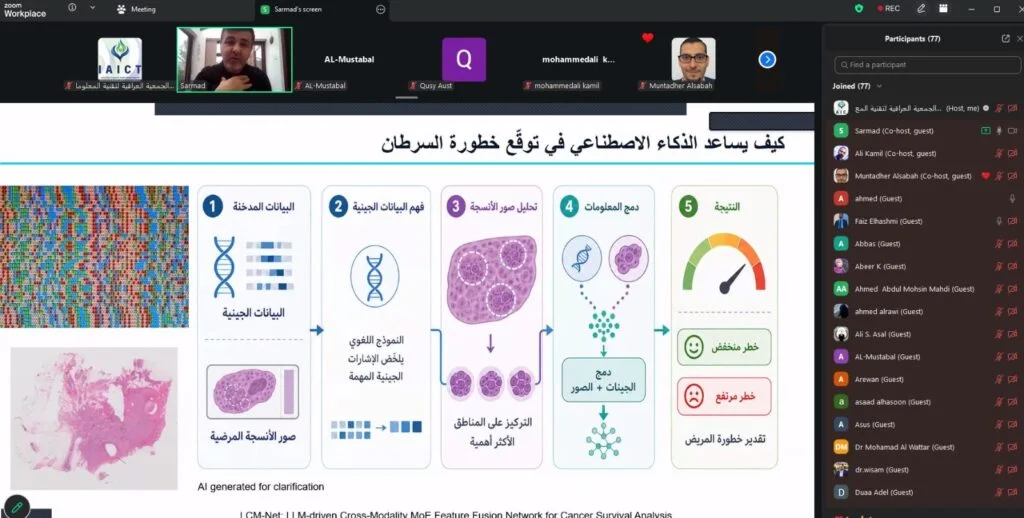
The seminar addressed the most prominent applications of artificial intelligence in the healthcare sector, where the lecturer reviewed the role of these technologies in the early detection of chronic diseases such as diabetes and cancer, as well as the possibility of predicting Alzheimer's disease through the analysis of sleep patterns and quality, reflecting promising prospects for developing healthcare and improving the quality of diagnosis.
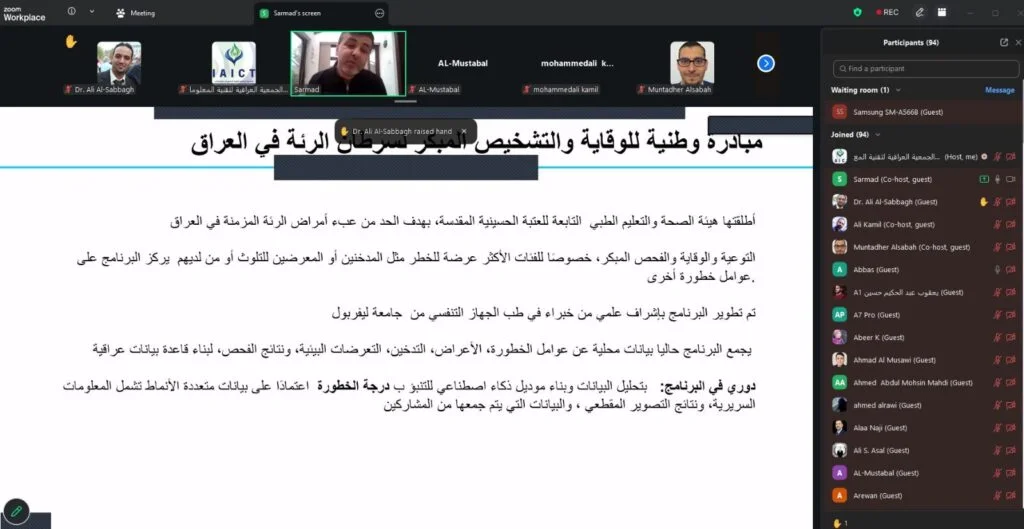
Dr. Sarmad Mueen also touched upon local experiences, highlighting the role of the Holy Shrine of Imam Hussein in developing advanced artificial intelligence models for predicting lung diseases in Iraq, through collaboration between Warith Al-Anbiya University and Warith Al-Anbiya Hospital, a step considered one of the pioneering initiatives at the national level.
The seminar witnessed remarkable interaction from the participants, who enriched the discussion with a set of questions and interventions that contributed to deepening understanding and reinforcing the concepts presented.
The seminar also discussed the most prominent challenges facing artificial intelligence applications in the healthcare sector, including the limited digital infrastructure, fragmentation of health data, shortage of specialized cadres in medical data analysis and smart solution development, in addition to limited technical and financial resources, especially in public health institutions, as well as resistance to change and weak collaboration with universities and research centers.
At the conclusion of the seminar, a set of necessary requirements to support the adoption of artificial intelligence in the medical field was emphasized, most notably building an integrated digital health infrastructure that includes medical records, images, and laboratory data, strengthening partnerships between the healthcare sector and academic and research institutions, along with establishing clear frameworks for governance, ethics, and ensuring data protection.