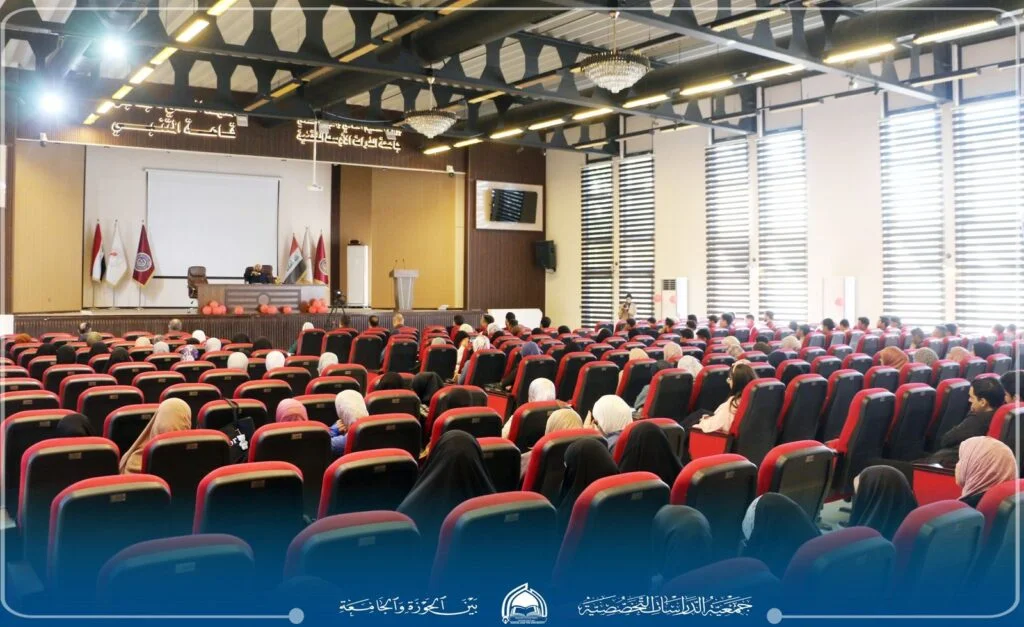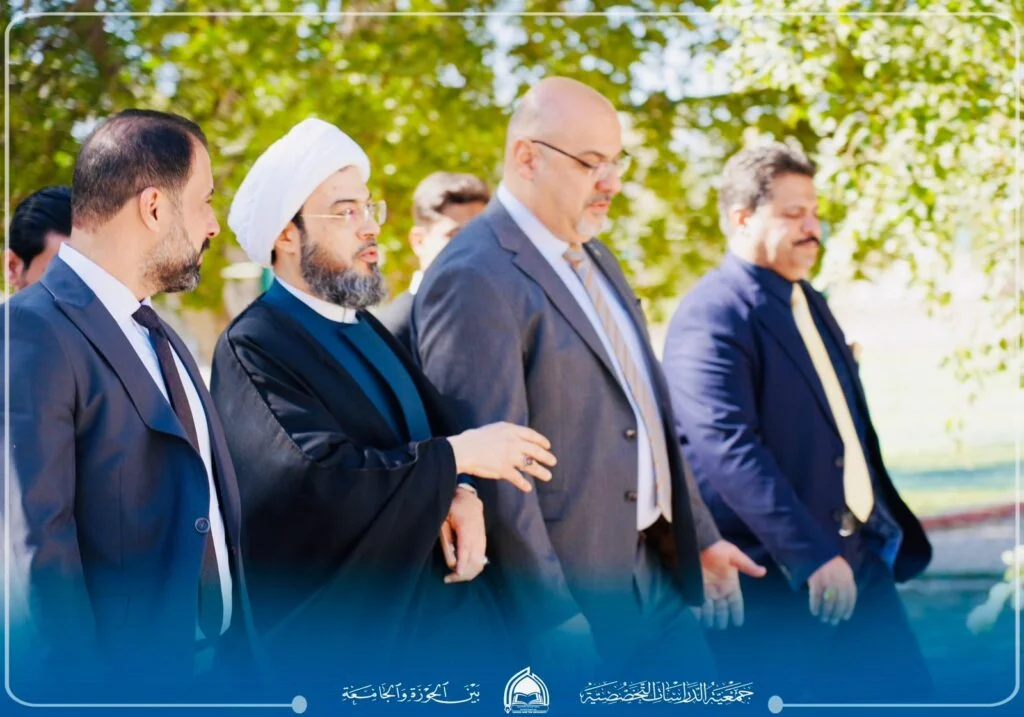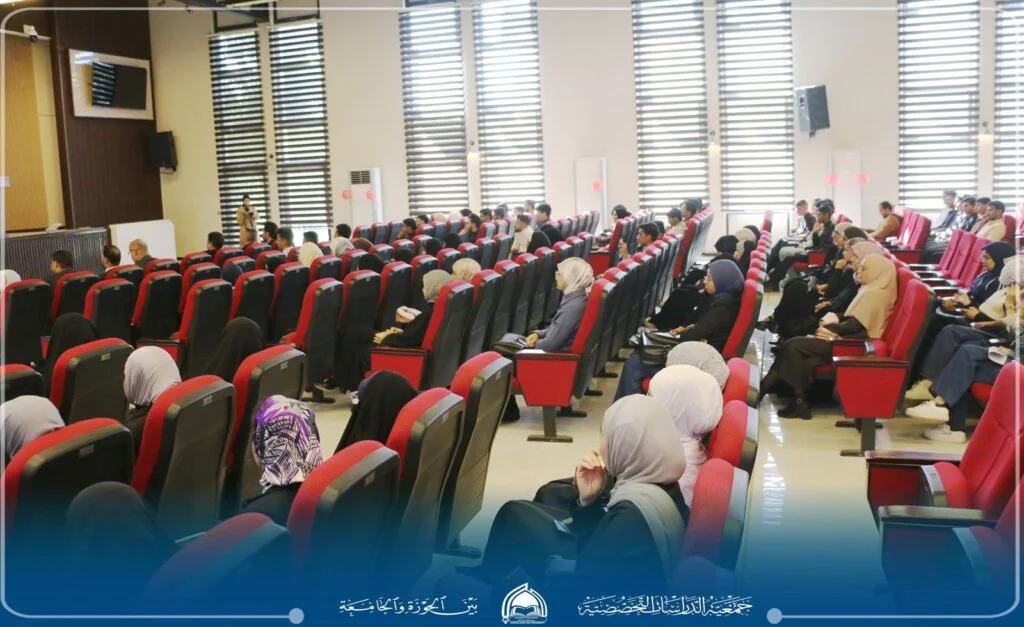
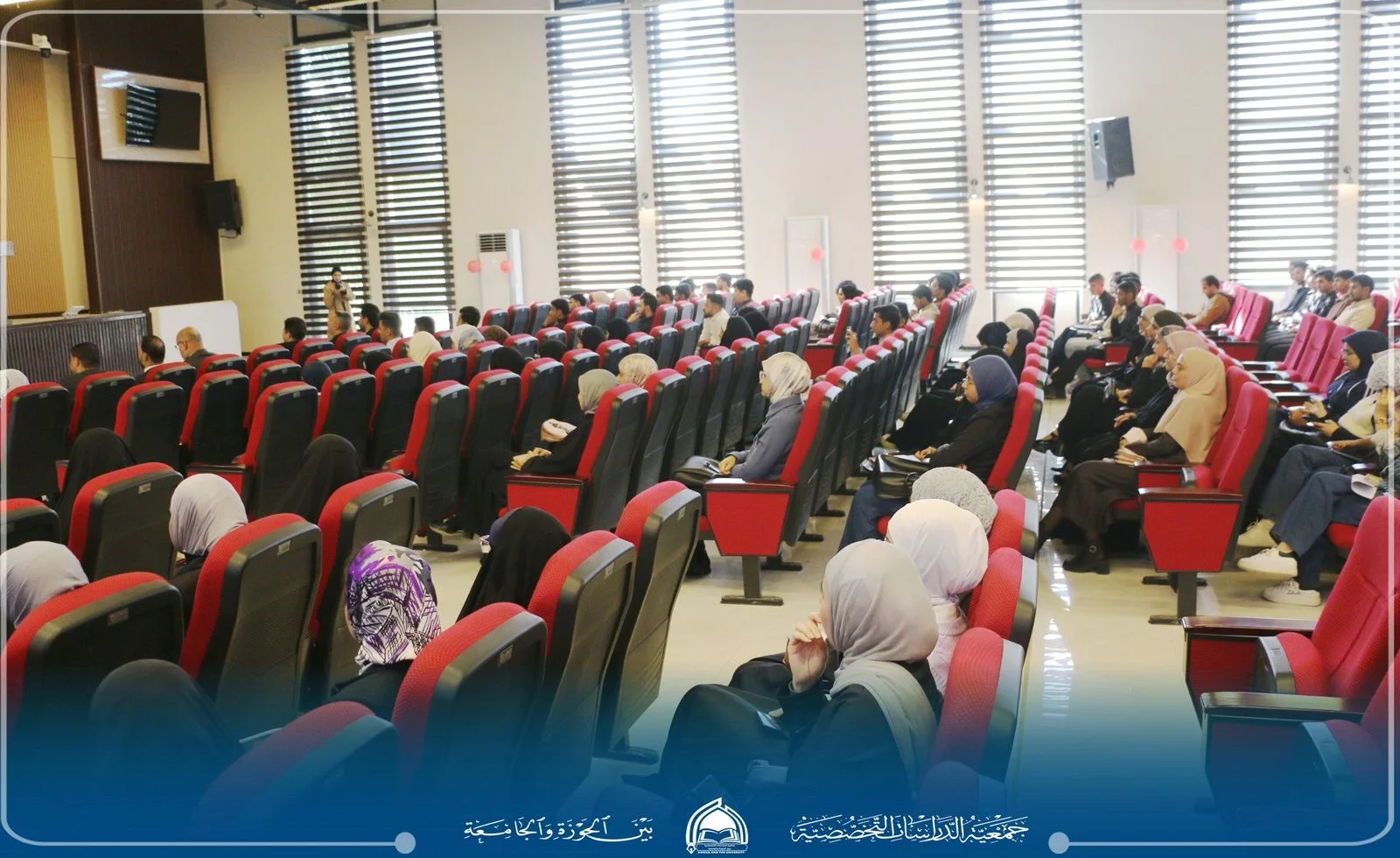
During his lecture at the Technical Institute in Babylon.
Technical Institute in Babylon
Sheikh Qasim al-Hashimi: Nations Rise through Depth of Methodology and Balance of Vision
Upon an invitation from Al-Furat Al-Awsat Technical University, the Technical Institute in Babylon, in cooperation with the Association for Specialized Studies between the Seminary and the University, held an educational scientific symposium titled:
"The University Student and the Methodology of Sound Thinking"
The symposium was attended by the Dean of the Institute, Professor Dr. Ali Najeh, along with a select group of professors and students. The lecture was delivered by the President of the Association, His Eminence Sheikh Qasim al-Hashimi, amidst notable interaction and distinguished attendance.
The symposium began with the Almighty's saying:
﴿Say, 'This is my way; I invite to Allah with insight, I and those who follow me'﴿
Whereby the lecturer emphasized that "insight" represents the essence of the scientific message, and that the university is not merely a space for obtaining a degree, but an environment for reshaping the mind and crafting methodology.
Sheikh al-Hashimi addressed the students, stating that they are not numbers in college records or averages in tables, but minds—if they are sound, the nation becomes sound through them. He clarified that the fundamental difference lies between a student of information and a student of methodology; the former memorizes and forgets, while the latter understands, analyzes, and forges his own path.
In his first theme, he explained that thinking is not just an academic skill, but an act of worship and a religious responsibility, citing the saying of Ali ibn Abi Talib: "There is no good in worship devoid of understanding," clarifying that true faith is based on comprehension and reflection, not on blind imitation.
He also warned of the danger of emotional reactivity in the age of digital speed, where news and opinions spread within minutes without verification, stressing that a sound mind questions the source, context, and evidence before adopting any stance.
He touched upon the difference between the intelligent person and the thinker, noting that intelligence may grant superiority in an exam, but a methodology of thinking grants superiority in life, citing the experience of the inventor Thomas Edison, who changed the world through a methodology of questioning and experimentation.
The lecturer presented practical steps for building a sound thinking methodology, most notably:
- Posing the question before adopting any idea.
- Reading beyond the boundaries of one's specialization.
- Mastering the art of listening.
- Documenting ideas through writing.
- Daily self-review of one's thoughts and decisions.
He affirmed that nations which rose did not rise due to an abundance of information, but through depth of methodology and balance of vision.
In the theme of national responsibility, he emphasized that Iraq needs balanced, critical minds as much as it needs scientific specializations, explaining that sound thinking reduces extremism and fosters a culture of dialogue and rational crisis resolution.
The symposium concluded with an emotional message in which he called upon students not to allow anyone to confiscate their minds or let anger lead their decisions, affirming that a degree may grant a job, but sound thinking grants leadership, and that leadership is not a position but awareness and responsibility.
At the end of his lecture, he also called for preparation to welcome the blessed month of Ramadan, turning to Allah Almighty and supplicating to Him in the pre-dawn hours, and investing in the divine effusions during this noble month as mentioned in the Prophet's (PBUH) sermon welcoming it.
The symposium witnessed notable interaction from the students, while the Deanship of the Institute expressed its appreciation for this fruitful scientific cooperation, affirming the continuation of purposeful partnerships that enhance the building of the university mind and support the march of academic awareness in society.
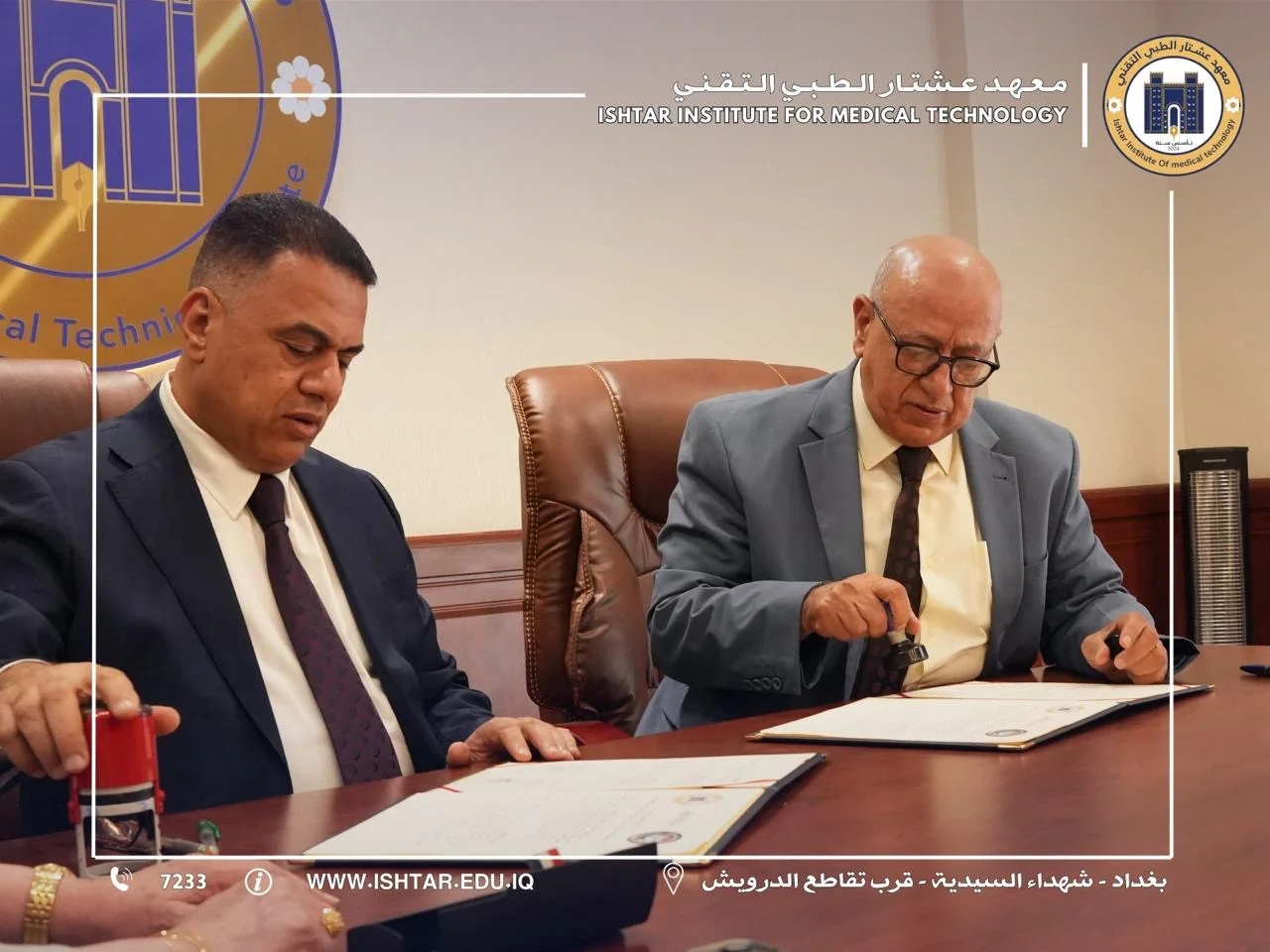
At the conclusion of the event, the Dean of the Institute presented a plaque of thanks to His Eminence Sheikh al-Hashimi in appreciation of his valuable lecture, while His Eminence honored him with a letter of thanks and appreciation, a shield, and publications from the Association in appreciation of his efforts and cooperation.